I will pick up where I left off in
Part 1 and start from Friday 19th February.
19th Feb was another 'rest day' so instead of being up early to go and set the nets, hide and shade, we were up early to go birding. Katherine, Peter and I kicked off the day at the Broome Poo Ponds (where else?!). We spent around 1 1/2 hours there, notching up 30 species, before departing at around 9.30. Highlights included Pink-eared Duck, Hardhead, Zebra Finch, Striated Pardalote and Red-tailed Black-cockatoo.
 |
| Striated Pardalote (Pardalotus striatus) |
After the Poo Ponds, we headed round to the Port in hope of seeing Brown Booby, but that wasn't to be. We only stayed for 10 minutes or so but in that time saw Greater & Lesser Crested Terns, Sooty Oystercatcher, a dark morph Eastern Reef Egret and a number of other species. We then decided to head back to Broome Bird Observatory (BBO) for a quick second breakfast, before picking Joris up and heading out onto Roebuck Plains in search of Yellow Chat.
 |
| Broome Port Jetty |
We were up on the Plains for about 1hr 45 and in that time saw lots of birds, including loads of Spotted Harriers and Brown Falcons, Tree & Fairy Martins, Wedge-tailed Eagle, Golden-headed Cisticola and our target species, the Yellow Chat. After having great luck with the Yellow Chats, we made our way to the highway and headed to a place called Yulleroo Scrape & Forest. There we spent a good hour and saw lots of birds, including a few new additions to the trip list - Long-tailed Finch, Dollarbird, Diamond Dove and Black-tailed Treecreeper!
 |
| Yellow Chat (Epthianura crocea) |
 |
| Diamond Dove (Geopelia cuneata) |
 |
| Yulleroo Scrape |
 |
| Yulleroo Forest, home to Black-tailed Treecreeper |
 |
| Black-tailed Treecreeper (Climacteris melanurus) |
After this we headed to Taylors Lagoon, not far up the highway. This was a haven for birds and we spent ages scanning the shore of the Lagoon for birds hiding in the long grass. We came up trumps with some more Pink-eared Duck, Wood Sandpiper, a Snipe species (probably Swinhoe's but can't rule out Pintail), Marsh Sandpiper, Black-fronted Dotterel and a Sharp-tailed Sandpiper with a plain yellow flag on its leg. After spending a while at Taylors Lagoon we decided we should probably start to head back to BBO. We didn't see much on the way back, apart from Red-collared Lorikeet, Red-winged Parrot, Peaceful Dove and a few more Dollarbirds all along Crab Creek Road.
 |
| Taylors Lagoon |
 |
| Mating dragonflies |
 |
| Whiskered Tern (Chlidonias hybrida) |
 |
| An effective birding team - covering all angles at once |
So now that I've rambled for a while, let me get back to the shorebirds! We stayed at BBO for 10 night and had 8 catching days there. The catching there was a bit more targeted than it was at Eighty Mile Beach so it was more a case of quality over quantity. Quite remarkably though, even with more targeted catching, we still managed to retain our 100% firing and catching success rate, which is very good going! We caught a good variety of species, including some that we hadn't caught many or any of at Eighty Mile Beach, such as Grey Plover, Eastern Curlew, Black-winged Stilt, Pied Oystercatcher and Greenshank, so that was really cool!
 |
| Minton's Strait (I think), Roebuck Bay |
 |
| Eastern Curlew (Numenius madagascariensis) |
 |
| Eastern Curlew (Numenius madagascariensis) |
 |
| Minton's Strait (I think), Roebuck Bay |
In addition to shorebird banding, we also got the chance to do some bush bird banding while we were at BBO as we were able to set up some mist nets next to the water baths and kept our fingers crossed. We had the nets open most afternoons and caught a variety of species including Bar-shouldered Dove, Peaceful Dove, Double-barred Finch, Rainbow Bee-eater and Little Friarbirds, but by far the most numerous species caught were Rufous-throated and Brown Honeyeaters.
 |
| Rainbow Bee-eater (Merops ornatus) |
 |
| Rufous-throated Honeyeater (Conopophila rufogularis) |
 |
| Bar-shouldered Dove (Geopelia humeralis) |
 |
| Double-barred Finch (Taeniopygia bichenovii) |
As well as all the birds I've already mentioned across the two posts, we saw heaps of other birds species, as well as other wildlife while we were out and about. Below are some pictures of the wildlife we encountered on the expedition (from Eighty Mile Beach & Roebuck Bay), as well as some scenery shots:
 |
| Australian Bustard (Ardeotis australis) |
 |
| Brown Falcon (Falco berigora) |
 |
| Oriental Plover (Charadrius veredus) |
 |
| Australasian (Richard's) Pipit (Anthus novaeseelandiae) |
 |
| Brolga (Grus rubicunda) |
 |
| Masked Lapwing (Vanellus miles) |
 |
| Lesser Frigatebird (Fregata ariel) |
 |
| Spotted Harrier with prey (Circus assimilis) |
 |
| Brown Falcon (Falco berigora) |
 |
| Brown Goshawk (Accipiter fasciatus) |
 |
| Whistling Kite (Haliastur sphenurus) |
 |
| Australian Pelican (Pelecanus conspicillatus) |
 |
| Lesser Frigatebird (Fregata ariel) |
 |
| Eastern Yellow Wagtail (Motacilla tschutschensis) |
 |
| Variegated Fairywren (Malurus lamberti) |
 |
| Moth sp, Anna Plains |
 |
| Moth sp, Anna Plains |
 |
| Moth sp, Anna Plains |
 |
| Moth sp, Anna Plains |
 |
| Ex Brown Snake(?) |
 |
| Stimson's Python (Antaresia stimsoni) |
 |
| Northern Blue-tongued Skink (Tiliqua scincoides intermedia) |
 |
| Gilbert's Dragon (Lophognathus gilberti) |
 |
| Gould's Goanna (Varanus gouldii) |
 |
| Hermit Crab, Eighty Mile Beach |
 |
| Crab sp, Eighty Mile Beach |
 |
| Northern Nail-tail Wallaby (Onychogalea unguifera) |
 |
| Great Northern Highway |
 |
| Our last sunset at Eighty Mile Beach |
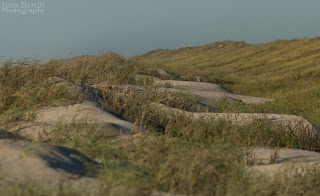 |
| Sand dunes of Eighty Mile Beach |
 |
| Sunset over Crab Creek Road, Broome |
 |
| Mangroves of Roebuck Bay |
For anyone thinking about attending next year’s expedition, my advice would be: do it! It is an absolutely incredible experience and one that I am sure you won't regret. The locations you visit are amazing, the people you meet are brilliant and so knowledgeable and the shorebird spectacles you are fortunate enough to witness are truly breathtaking. I know that if time and finances permit, I will hopefully be returning next year for some more sun, sand and shorebirds!!
 |
| Most of the team at Eighty Mile Beach |


